If you are senior graduate student or postdoc interested in joining our group, please consider applying to
- Lamont-Doherty Earth Observatory Postdoctoral Fellowships
- NSF Atmospheric Science Postdoctoral Research Fellowships
Or contact Róisín with an overview of your research interests to discuss proposal ideas. There are no open positions in the group at the moment.
Research Overview
We investigate surface - atmosphere fluxes of greenhouse gases and air pollutants using field measurements, atmospheric trace gas observations and various modeling tools and the ecosystem processes driving these fluxes. Our urban work is hosted on the New York Atmospheric composition and Air Quality (NYAAQ) website. We focus on carbon (CO2 and methane) fluxes for our Arctic tundra and Boreal ecosystems. Our global approach to quantifying carbon fluxes is explained in the CarbonFOX project and more recently through collaborations with the MethaneSAT mission.
Recent News

Roisin is Primary Investigator (PI) on a recently selected NOAA proposal focussing on "Quantifying the impact of biogenic and anthropogenic fluxes on the atmospheric composition of the New York City Metro Area" with John Mak at Stony Brook University and Andrew Reinmann, City University of New York. Our New York centric project will be further developing our CO2 measurement network and will be completing a series of summer intensives over the next few summers.
We are delighted to have Garima join us for this project. And Andrew Reinmann at CUNY is currently looking for a graduate…

With the continued work from home orders our research this summer mostly continues online. Róisín is still in New York City but the rest of the group are spread throughout the country. Luke and Bronte are in MA, Ludda is in RI and Charlotte is in CA. Unfortunately the project Zeyi is working on has been suspended until we can get back in the lab again. While it's not the same as seeing each other in person, we are embracing online group meetings with added pets.
Our newest group member Savannah is joining as part of the Lamont-Doherty Earth Observatory REU program…
Róisín spoke with Matt McGrath from the BBC again about carbon emissions in NYC in his article titled: Climate Change and Coronavirus. With everything shutdown in NYC, CO2 emissions were notably reduced but 80-90% of NYC's emissions remain. She thinks it's a good example of why personal behavior alone is not the solution to climate change.

Our urban work was featured in a blog post by Elise Gout on the Earth Institute's State of the Planet: Project Takes A New Approach to Gauging New York City’s Emissions
Both Róisín and Luke were mentioned. Thanks to Ricardo Toledo-Crow from the Next Generation Environmental Sensor Lab, Environmental Sciences Initiative, Advanced Science Research Center, CUNY for some great photos for the article!
The COVID-19 shutdown of New York City in March 2020 has improved the air quality and changed how much carbon dioxide, carbon monoxide and methane we see in the atmosphere at the CUNY ASRC observatory in Harlem. Róisín spoke with a number of media outlets about what that means for carbon and air quality in NYC.
Although Róisín will never listen to it, her presentation at the American Meteorological Society annual meeting in January 2020 is now available online: Commane, Schiferl, et al., Assessing the Impact of African Emissions on tropical atmospheric composition, 2020
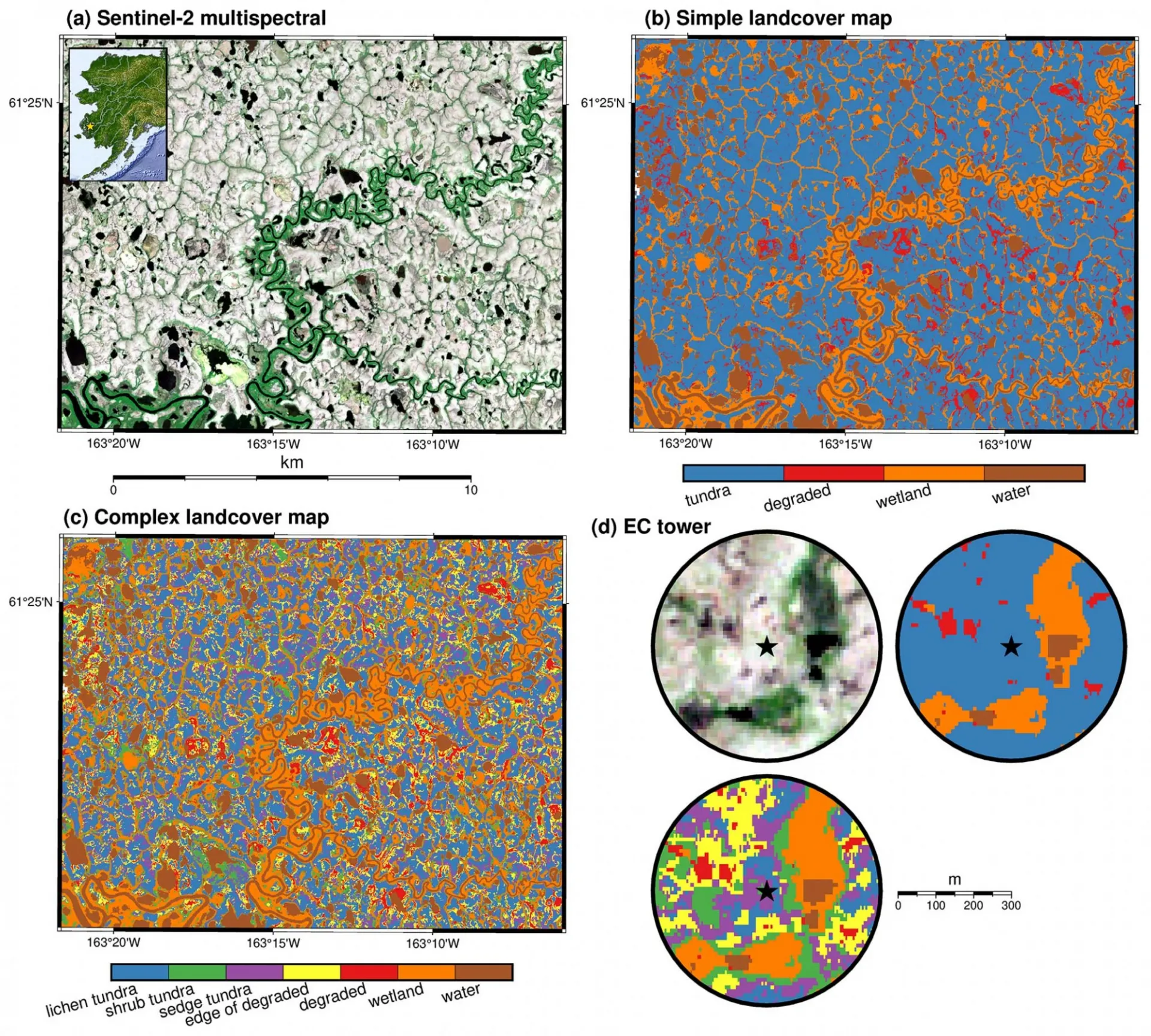
At the American Geophysical Union Fall meeting in December 2020 Ludda Ludwig gave a talk on her work on using machine learning models to predict dissolved methane and carbon dioxide concentrations in water bodies in the Yukon-Kuskokwim Delta in Alaska. Carbon dioxide concentrations were tightly coupled to dissolved oxygen and increased in lakes with more complex shapes. Methane concentrations increased as a function of both dissolved carbon availability and lability. Using remote sensing data of watershed land cover and lake shape and size, dissolved methane and carbon dioxide can be scaled to…
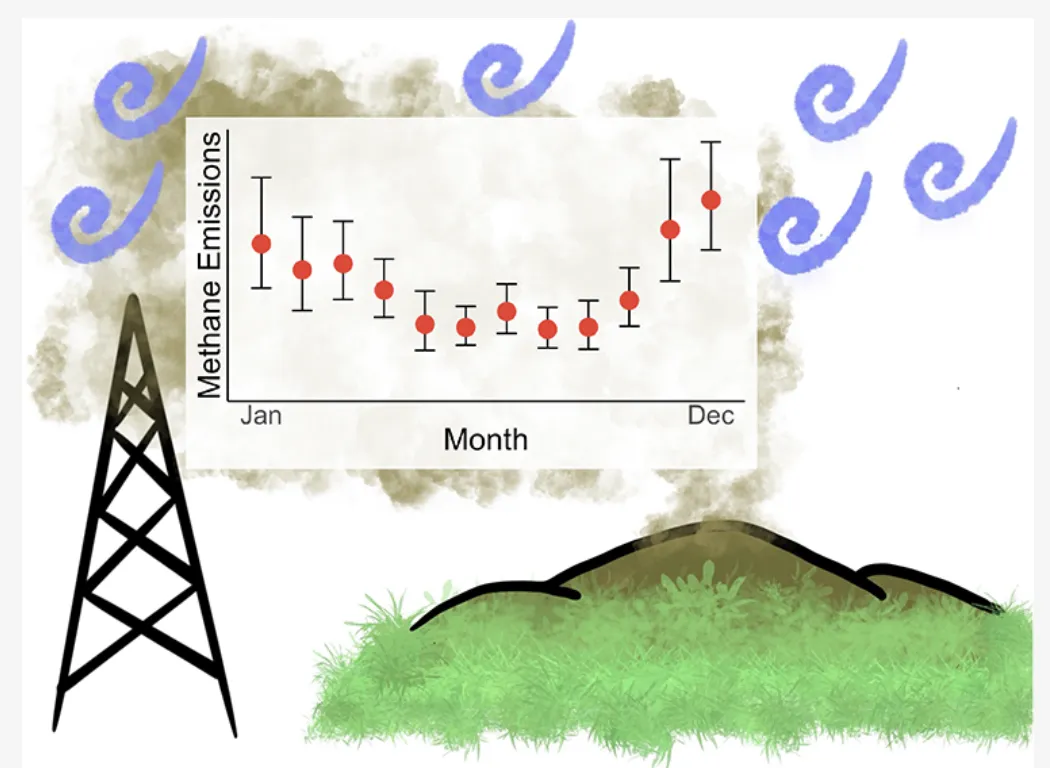
Ludda Ludwig and Roisin Commane were coauthors on a publication in Nature Climate Change released in October 2019 titled “Large loss of CO2 in winter observed across the northern permafrost region.” This study was a large collaboration from the Permafrost Carbon Network that synthesized more than 1,000 on-the-ground observations of monthly CO2 emissions. These data are particularly difficult to collect in arctic winters. The cold and darkness can prevent the operation and powering of instrumentation, and the remote locations make it difficult to install and maintain flux systems.…

Róisín attended the 2nd international workshop on carbonyl sulfide (OCS) in Obergurgl, Austria, hosted by University of Innsbruck. The attendees were mainly from Europe with four American attendees. It was an informative and cross disciplinary workshop. Roisin presented an overview of airborne OCS observations and recent work at Harvard Forest.
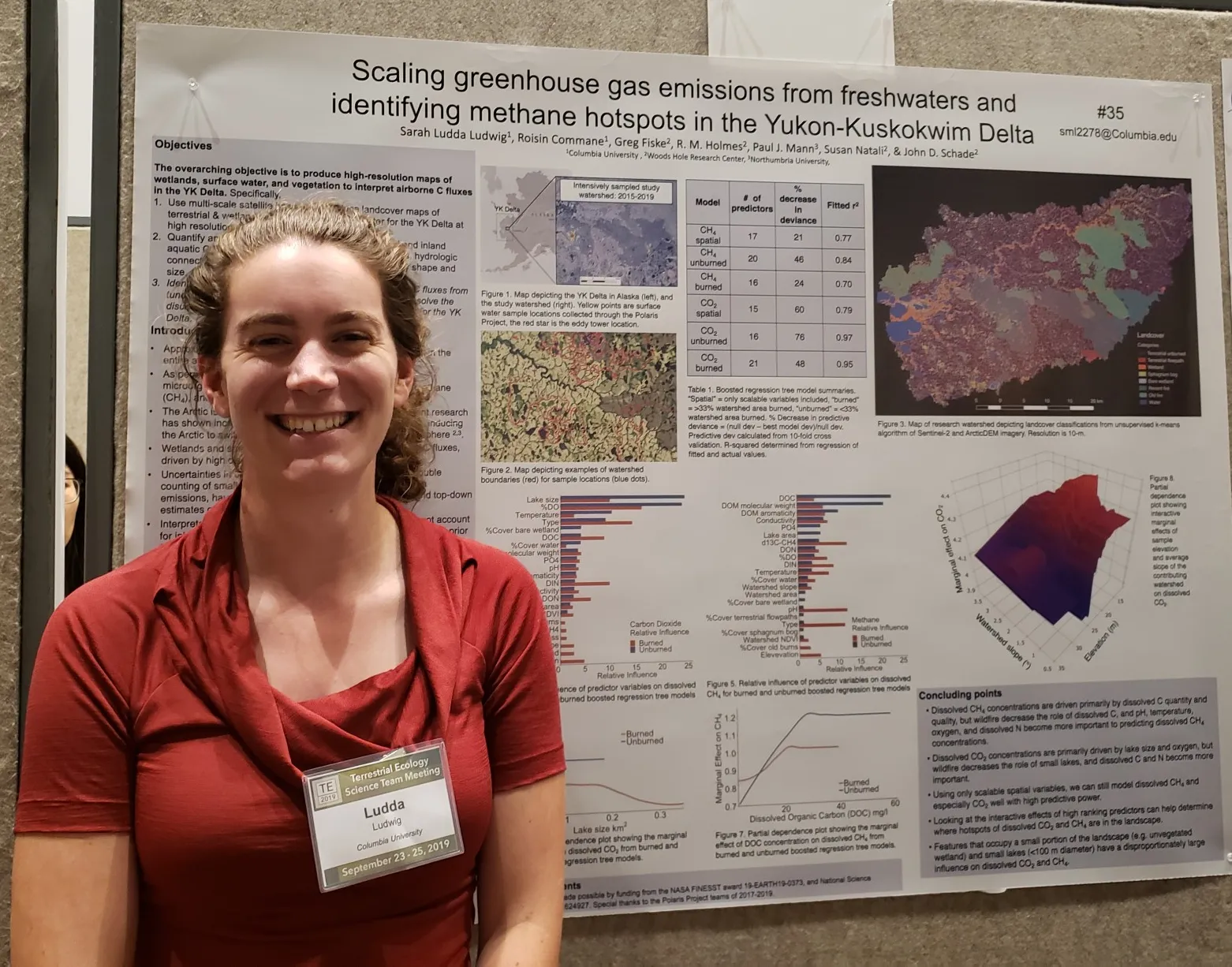
Ludda Ludwig presented the first work from her NASA FINESST fellowship at the NASA Terrestrial Ecology meeting at University of Maryland this week! Congrats on a great lightning talk and poster presentation Ludda!
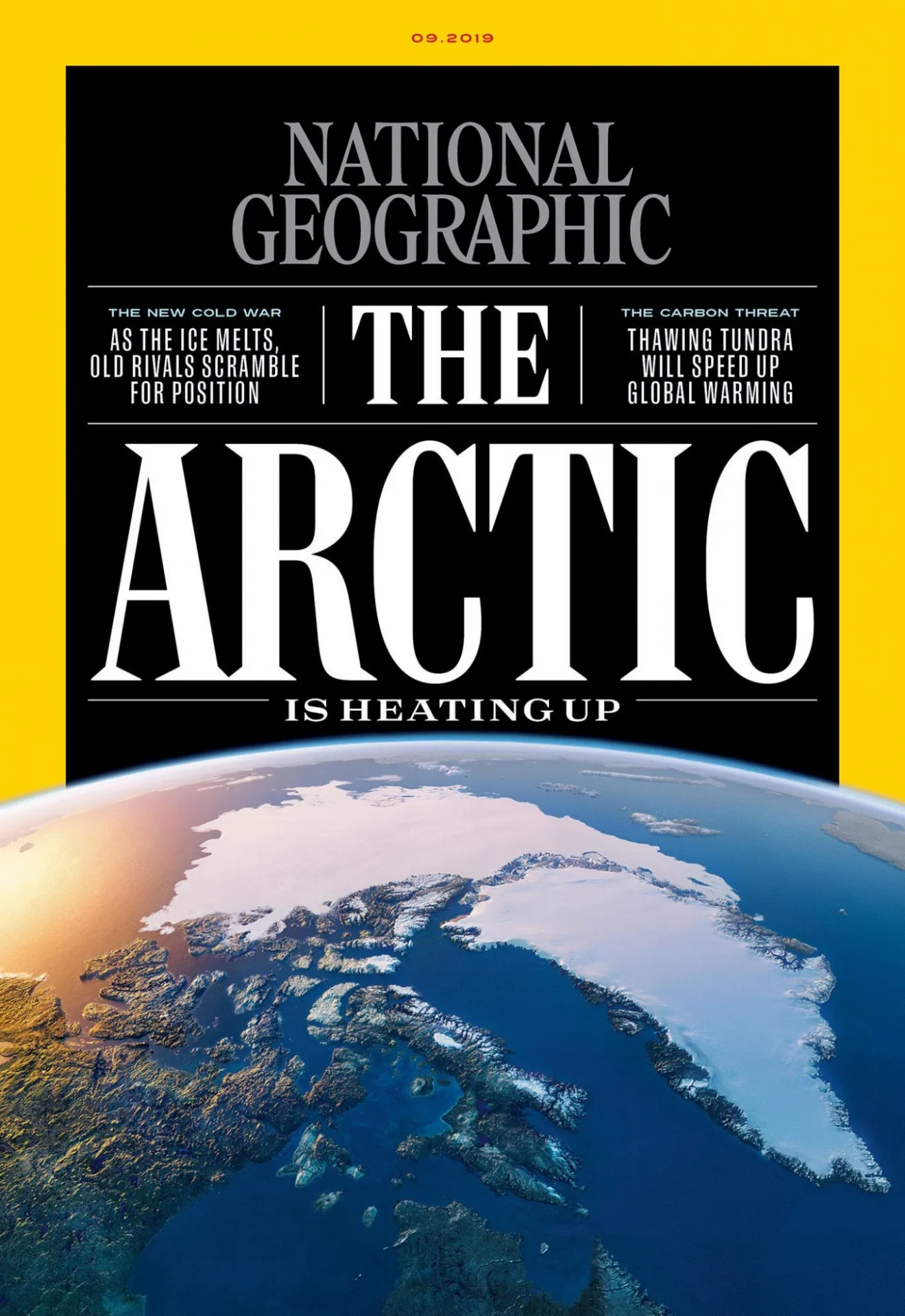
Róisín was very excited to be quoted in National Geographic! Craig Welch has written a feature "The Arctic is thawing fast. That affects us all" for the September 2019 edition of National Geographic. The piece has some amazing photos by Kate Orlinsky and a little input from Róisín.
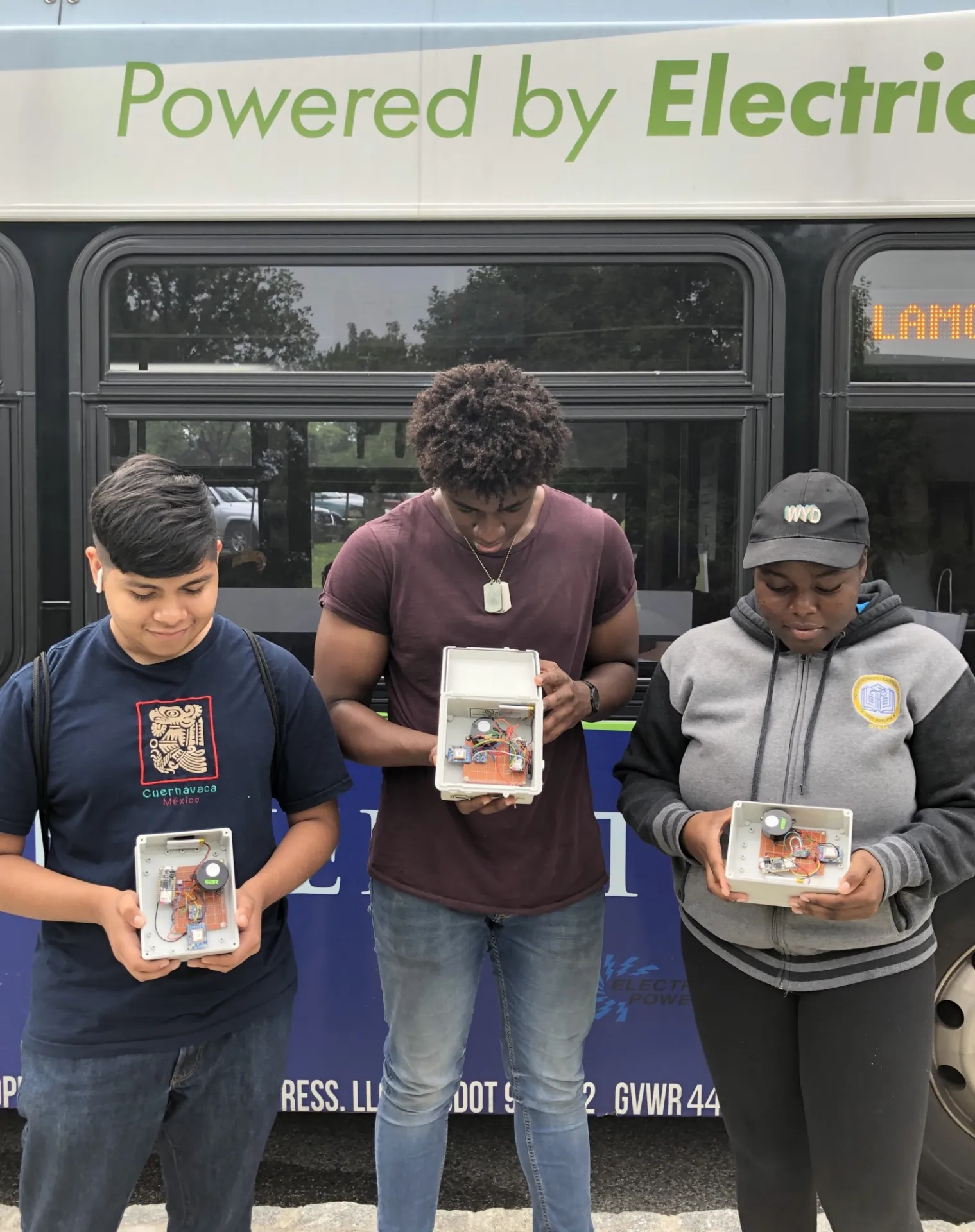
Our summer high school engineering students Barakat, Miguel, Durrel and Brianna presented their work this week in a poster entitled: "Building a cost effective device to measure CO2 in NYC". They worked with (the wonderful) Nick Frearson on coding the arduino controllers, practiced their soldering skills and made mobile measurements of CO2 between Lamont and various parts of NYC. They analyzed the data in R and made a really great poster for the end of the summer.
Well done to everyone for a successful project!