
Group trip to Harvard Forest
Image Carousel with 4 slides
A carousel is a rotating set of images. Use the previous and next buttons to change the displayed slide
-
Slide 1: Our team on the top of the Hardwood tower surveying the forest
-
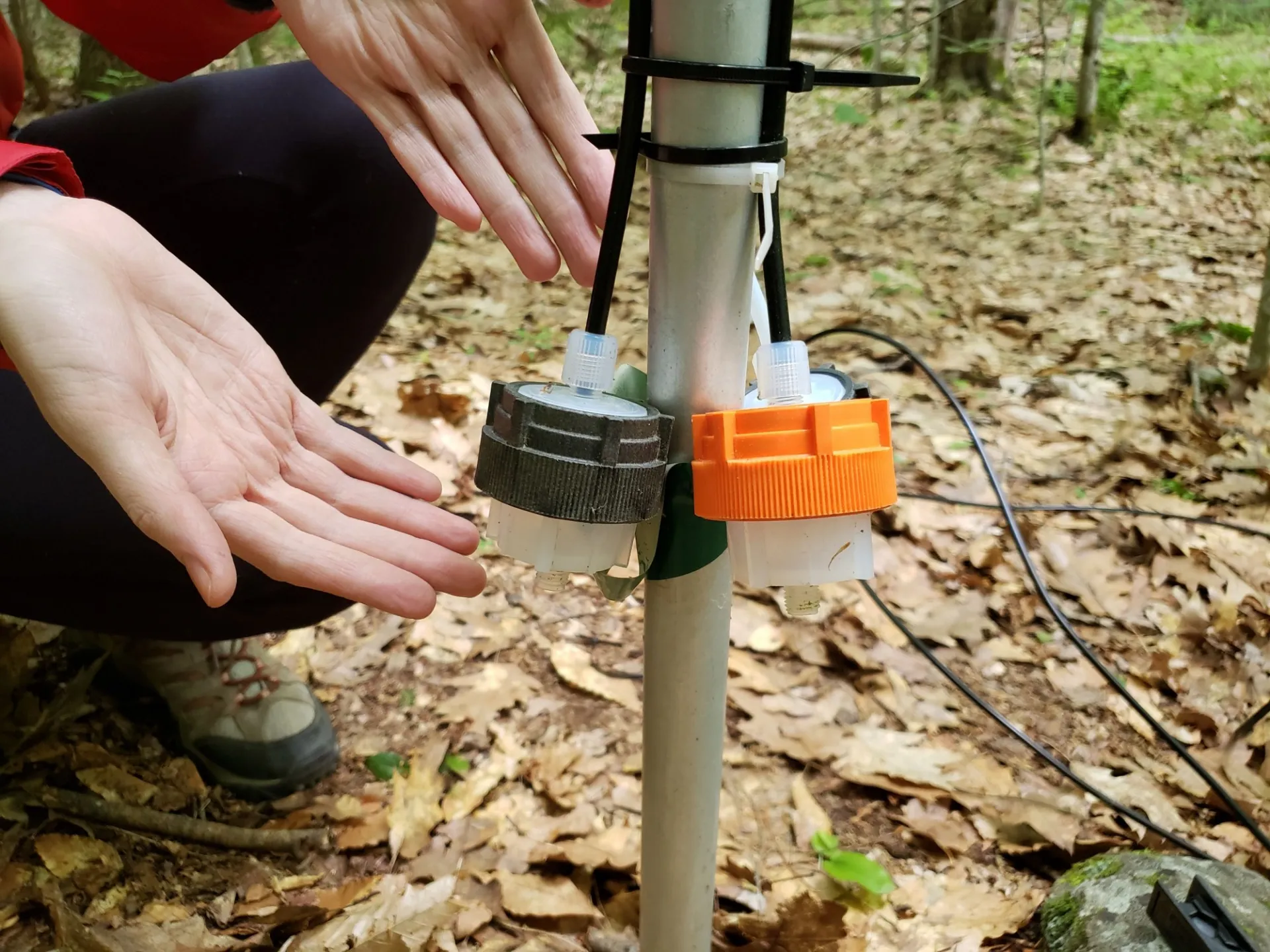
Slide 2: Emily modeling the lower sampling inlet at the same height as other measurements
-
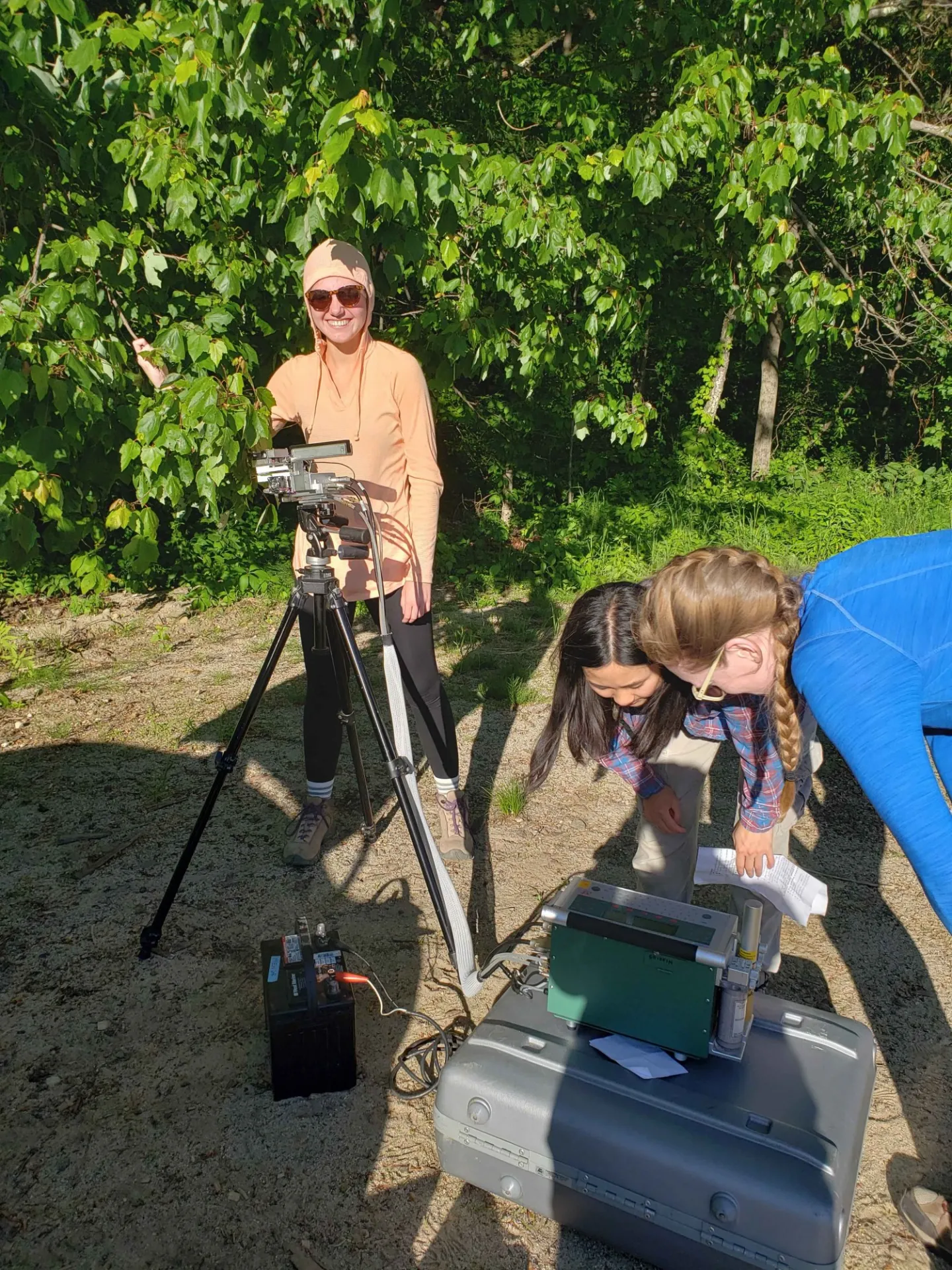
Slide 3: Leaf Studies had to contend with ticks and mosquitoes
-
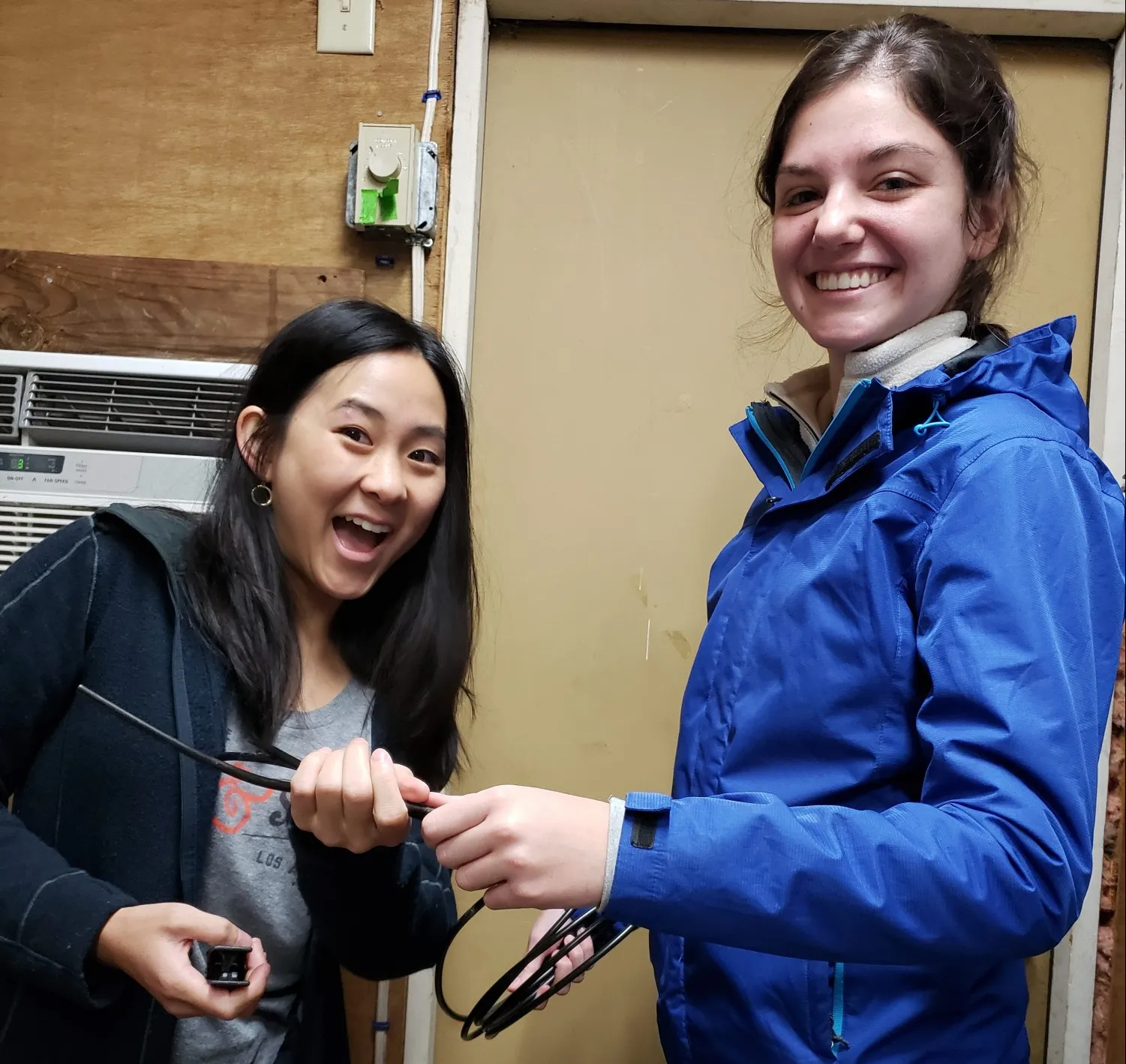
Slide 4: Charlotte and Chandler cutting tubing for the additional sampling lines
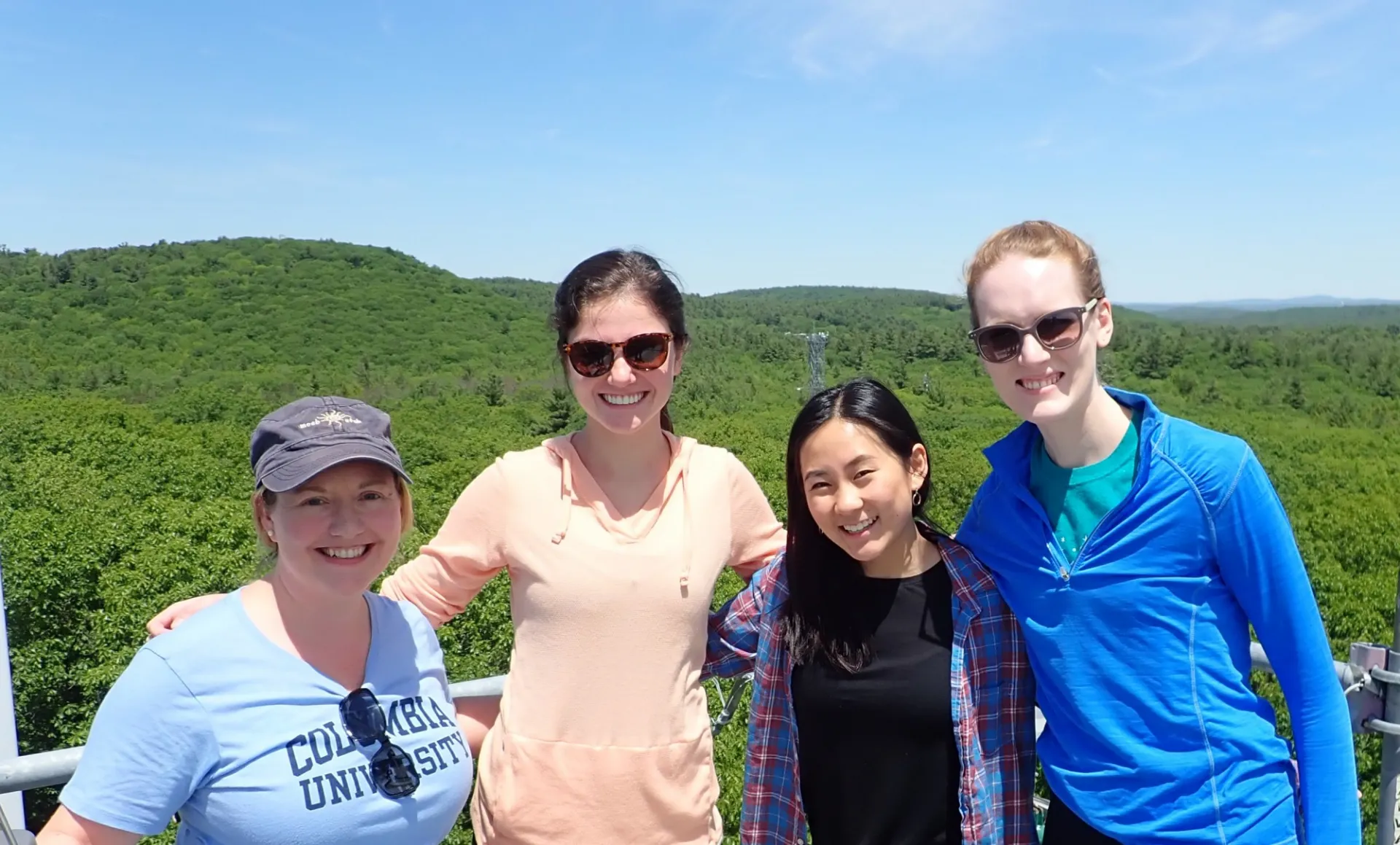
Róisín, Emily, Chandler, and Charlotte travelled to Petersham, MA to visit the Harvard Forest research facility in June 2019. Our aim was to make qualitative observations pertaining to studies of trace gas fluxes of CH4, OCS, and tropospheric O3, to change the setup and gather data from OCS sensors for observing patterns in stomatal conductance.
Our first day, we met Harvard Forest researcher Mark VanScoy, who took us up the 92 foot tall walk-up observation tower, situated in a small clearing, with a viewing platform about 10 feet above the red oak, maple, and hemlock stands. The forest is relatively young (and short), having grown completely anew after farming leveled any older growth in the 1930s. Now the 4000 acre forest has a full upper canopy (as of June) allowing for soft dappled lighting on the forest floor. From this spot, we could see the EMS tower (Environmental Measurement Station Eddy Flux tower) in the distance, a 30 meter structure laced with cables for measuring gas fluxes above and below the canopy. We will be using measurements from the EMS tower to assess the accuracy of the Modified Bowen Ratio method for calculating ozone flux. Dr. Commane used a handheld wind sensor to show the difference in wind velocity between the understory and canopy. We observed that on a relatively hot day (low 80’s F), wind velocity was much higher above the canopy and the above and in canopy are almost disconnected.
We then met with researchers Dr. Bill Munger (Harvard) and Dr. Daniel Obrist (UMass Lowell and project PI) to learn about advances in methods for measuring forest Hg fluxes. Dr. Obrist and our crew hiked to the “shed”, a research station containing the devices for measuring gas flux and gradients from the EMS tower. Dr. Commane observed irregular spikes in OCS but no increase in CO2, suggesting OCS is being released from solenoids within the flow controller interface.
The next day, Dr. Commane and Emily changed the sampling setup to minimize the impact of the OCS buildup on the sampling flow. We installed new sampling lines (and filters) below the canopy for soil-level gradient measurements, just before the rain arrived. And finally we downloaded data from the device as it was not online yet. We also brought with us a LI-COR 6400 XT and observed CO2 uptake in brightly lit, shaded, and damaged maple leaves closer to the main laboratories at Harvard Forest.